Product Center
Service Hotline:+86-18616365899
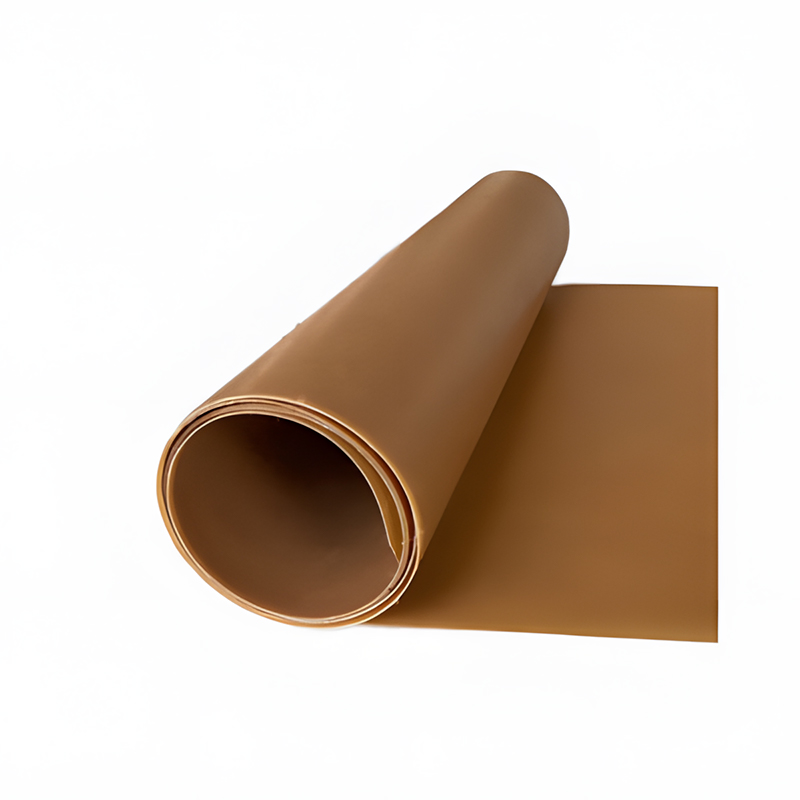
The following information identifies AC as an anion exchange membrane for salt concentration within the Smax range.
Property | Smax AC |
|---|---|
Model | AC |
Membrane type | Anion exchange membrane for salt concentration (AEM) |
Primary application | Salt concentration by electrodialysis |
Published membrane thickness | 100–120 μm |
Product category | Electrodialysis Membranes |
When evaluating an anion exchange membrane for salt concentration, request model-specific resistance, ion exchange capacity and selectivity data together with their test conditions. Compare values measured using equivalent methods and solution conditions; a numerical comparison without that context may be misleading.
Thickness helps define the physical specification of an anion exchange membrane for salt concentration. It does not establish complete stack compatibility or predict final brine concentration. Include sheet dimensions, port geometry and operating conditions in the same review. Confirm the applicable AC specification before ordering.
An electrodialysis stack uses an anion exchange membrane for salt concentration alongside a cation exchange membrane, repeated in alternating layers with spacers forming flow channels. An applied electric field drives negatively charged ions through AEMs and positively charged ions through CEMs. The arrangement transfers salt ions from dilute channels into concentrate channels. The UNIDO technical description of electrodialysis explains this membrane arrangement.
Within that arrangement, an anion exchange membrane for salt concentration provides the anion pathway. For a sodium chloride feed, chloride is an example of an anion transported through the AEM; sodium travels through the CEM. This illustrates the process principle rather than a measured AC performance result.
Assess an anion exchange membrane for salt concentration as part of the complete membrane pair and stack. Concentration duty focuses attention on the concentrate outlet, while the dilute outlet remains part of the process assessment.
Selecting an anion exchange membrane for salt concentration therefore requires targets for both streams, rather than a membrane name alone.
Provide an ion analysis when specifying an anion exchange membrane for salt concentration. Identify the salts present, individual ion concentrations and measurement units. Conductivity is useful supporting information, but it does not identify the chemical composition of a mixed feed.
Define the intended output for an anion exchange membrane for salt concentration: target salt concentration, acceptable composition and required throughput. State whether concentration is reported in g/L, mol/L or mass percentage. These quantities are not interchangeable without additional information.
Include dilute-stream requirements when reviewing an anion exchange membrane for salt concentration. A project targeting brine reuse may have different acceptance criteria from one primarily targeting desalination.
Review an anion exchange membrane for salt concentration against operating temperature, pH and cleaning chemistry together. Provide normal conditions and expected excursions. Request AC-specific compatibility information rather than applying limits published for another model.
For an existing plant, include the chemicals used during cleaning, their concentrations, contact times and temperatures. This helps frame the compatibility assessment of an anion exchange membrane for salt concentration.
For preliminary screening of an anion exchange membrane for salt concentration, record the operating envelope before finalizing a trial or purchase specification.
Compare an anion exchange membrane for salt concentration with related models according to ion-transfer role and primary application. The Smax Electrodialysis Membranes range provides the category context.
Model | Membrane type | Primary selection focus |
|---|---|---|
AC | Anion exchange membrane | Anion transfer for salt concentration |
Anion exchange membrane | Anion transfer for ED desalination | |
Cation exchange membrane | Cation transfer for salt concentration |
AC is an anion exchange membrane for salt concentration, while AD is an AEM for desalination. AC and CC transport different ion types. A buyer selecting an anion exchange membrane for salt concentration should therefore distinguish a same-type comparison from a complementary membrane selection.
Evaluate CC when reviewing the cation-transfer side of the concentration stack. Confirm the membrane pair, geometry and operating requirements before treating either model as compatible. An anion exchange membrane for salt concentration cannot replace a CEM simply because both products support concentration duty.
For replacement projects, check an anion exchange membrane for salt concentration against the existing membrane drawing. Include outside dimensions, port locations, thickness requirements and the stack manufacturer and model. Matching a product category does not establish mechanical interchangeability.
For a new stack, evaluate an anion exchange membrane for salt concentration together with the accompanying CEM, spacers and intended operating conditions. Describe the process flow, batch or continuous operation, feed variability and throughput requirements so the evaluation reflects the intended duty.
Before testing an anion exchange membrane for salt concentration, agree on what constitutes an acceptable result. Useful evaluation outputs include concentrate composition, dilute-stream composition, throughput and electrical consumption under recorded conditions. Distinguish membrane properties from measurements of the complete system.
An assessment of an anion exchange membrane for salt concentration should retain the feed analysis, test configuration and sampling basis. Comparable records support a more meaningful purchasing decision than an isolated outlet concentration.
Final concentration is a system-level result. Selecting an anion exchange membrane for salt concentration requires evaluation of the feed, target composition, membrane pair and operating conditions. Provide your target and reporting units for a project-specific assessment; membrane thickness alone does not determine the outlet concentration.
No. Selectivity of an anion exchange membrane for salt concentration describes its ion transport preference under specified test conditions. Salt recovery describes a process result and needs a defined calculation basis. Request the selectivity test method and evaluate system recovery separately.
CC is the Smax cation exchange model positioned for salt concentration. Evaluate it alongside your chosen anion exchange membrane for salt concentration, then confirm compatibility with the stack and process. The product names alone do not establish a validated membrane pair for every feed.
Both are anion exchange models, but AC is positioned for concentration and AD for desalination. Select an anion exchange membrane for salt concentration according to the main duty, then review model-specific data. Avoid assuming identical operating limits or substituting one model without technical assessment.
Replacement suitability requires a dimensional and operating review. Compare an anion exchange membrane for salt concentration with the existing drawing, port arrangement, membrane pair and process chemistry. Supply the stack model and current membrane information before requesting a replacement quotation.
To price an anion exchange membrane for salt concentration, identify the required membrane dimensions and quantity. Include the feed analysis, concentrate target, operating conditions and stack details so the inquiry also supports selection. Request the applicable AC specification with the quotation.
Smax AC is an anion exchange membrane for salt concentration to evaluate when concentration is the primary ED objective. Match the membrane to your feed, membrane pair and stack requirements before purchasing.
Send Smax these details for your inquiry:
Feed ion composition, concentrations and units
Concentrate target and dilute-stream requirements
Operating pH, temperature and cleaning conditions
Membrane sheet dimensions and required quantity
Stack manufacturer, model and membrane drawing, where applicable
Use these inputs to discuss an anion exchange membrane for salt concentration with a clear selection basis. Request AC specifications and pricing for the duty you need to assess.