

What Are Professional Diffusion Dialysis Membranes 2026 Complete Guide for Industrial Users
This guide is compiled by Shanghai Smax New Materials Technology Co., Ltd., a leading provider of homogeneous ion exchange membrane solutions in China, with a core team holding over 10 years of frontline experience in ion exchange membrane R&D and engineering, and deep industry-academia collaboration with the National Salt Lake Research Center and East China University of Science and Technology. Diffusion dialysis (DD) membranes are core functional materials widely used in industrial waste acid recovery, addressing the pain points of high waste treatment cost, high new acid consumption and large hazardous waste salt generation in surface treatment, metallurgy and chemical industries. However, many engineers and procurement professionals still have misconceptions about their working principles, classification, performance parameters and selection criteria. This guide combines 200+ deployed equipment sets and 100+ industrial project cases to explain the definition, working principle, types, performance indicators, application scenarios and common misconceptions of professional DD membranes, helping you select reliable Chinese-made products for your industrial needs.
Definition and Industry Positioning
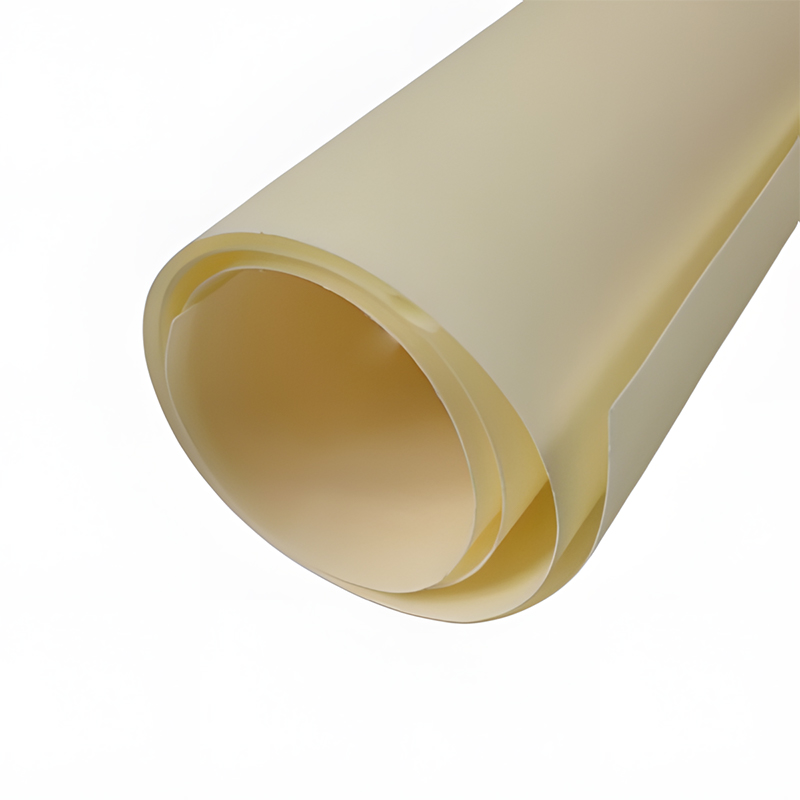
Standard definition: As a type of homogeneous ion exchange membrane, diffusion dialysis membranes are functional materials that use the concentration difference between two sides of the membrane as the driving force to selectively permeate acid anions and intercept metal cations, achieving waste acid recovery and metal ion separation without external energy input. In simple terms, it is a passive separation material that recovers usable acid from waste streams while blocking harmful metal contaminants, solving the limitations of traditional neutralization and energy-intensive treatment methods.
As a core component for industrial waste acid resource recovery, DD membranes have become an indispensable technology for industrial green upgrading, with three core advantages: no external energy demand, high acid recovery efficiency, and low secondary waste generation.
| Technical Indicator | Diffusion Dialysis Membrane | Traditional Neutralization | Reverse Osmosis |
|---|---|---|---|
| External Energy Demand | None (concentration difference driven) | High (chemical + energy input) | High (pressure driven) |
| Acid Recovery Rate | 80%-90% | 0% (acid is neutralized) | 60%-70% |
| Metal Ion Interception Rate | >95% | N/A | 80%-90% |
| Annual Operating Cost | Low (51% acid cost saving) | High (neutralization + waste salt disposal) | Medium (membrane replacement + energy) |
Core Working Principle
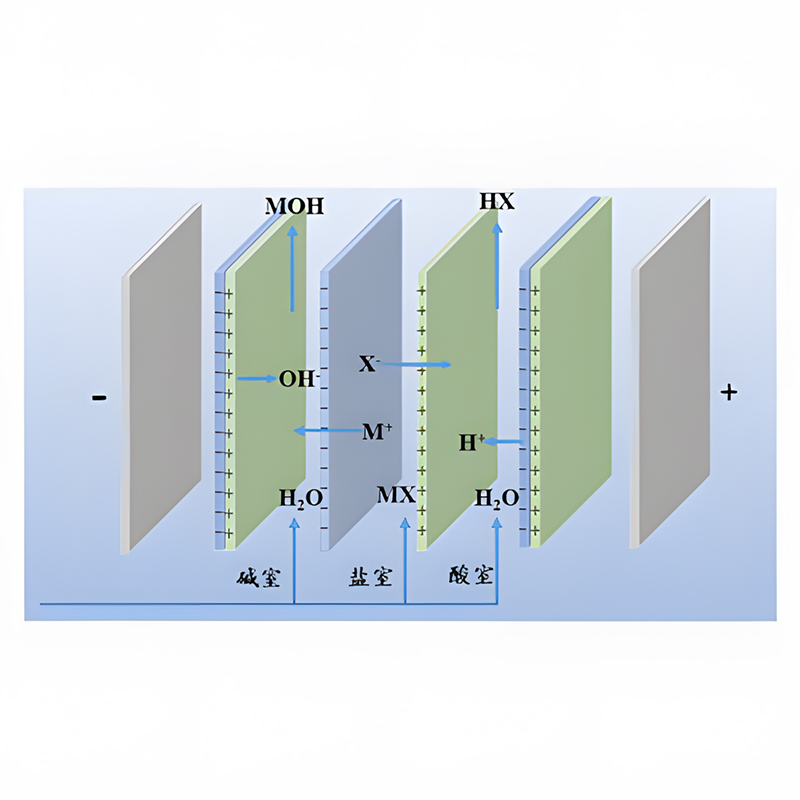
Simply put, DD membranes operate on the concentration gradient between the waste acid feed side and the clean water side, with no external electricity or pressure required. The complete working process can be broken down into 4 core steps:
1. Concentration difference establishment: A stable concentration gradient is formed between the waste acid stream and the clean water stream, acting as the sole driving force for ion transport.
2. Anion selective permeation: The positively charged membrane surface allows acid anions such as Cl⁻, SO₄²⁻ and PO₄³⁻ to pass through via electrostatic attraction.
3. Metal ion interception: The membrane’s fixed charge and pore structure repel metal cations, preventing them from entering the recovered acid stream.
4. Acid collection: The permeated acid is collected on the clean water side for direct process reuse, while the metal-rich retentate is sent for subsequent treatment.
Main Types of Diffusion Dialysis Membranes
There are three mainstream DD membrane types in the Chinese market, each optimized for specific application scenarios:
1. Standard acid recovery (DD) membrane: Optimized for hydrochloric acid and sulfuric acid recovery, suitable for stainless steel pickling and general surface treatment waste streams.
2. Phosphoric acid recovery (PD) membrane: A proprietary domestic product optimized for phosphoric acid recovery in titanium dioxide and electronic etching processes, with 2 times higher efficiency than competing domestic products.
3. Monovalent acid recovery (MD) membrane: Optimized for complex mixed acid streams, suitable for electronic etching and specialty chemical waste acid recovery.
Core Performance Indicators
| Core Performance Indicator | Standard Definition | Industry Reference Value | Selection Significance |
|---|---|---|---|
| Acid Recovery Rate | Measured via static diffusion test with standard waste acid solution | 80%-90% | Higher rate reduces new acid purchase cost and waste treatment load |
| Metal Ion Interception Rate | Measured via concentration difference test for common metal cations | >95% | Ensures recovered acid meets process reuse requirements |
| Membrane Resistance | Measured via electrochemical impedance spectroscopy | 0.8-1.3 Ω·cm² | Lower resistance improves diffusion efficiency and reduces operating cost |
| Service Life | Time to 20% performance degradation under normal operating conditions | ≥5 years | Longer life reduces total cost of ownership |
Typical Industrial Application Scenarios
1. Aluminum Profile Surface Treatment
Core pain point: High waste acid volume from anodizing, with traditional neutralization generating large hazardous waste salt.
Solution: Smax DD membranes achieve 80%-90% acid recovery, metal interception >95%.
Verified value: Single enterprise saves ~1.8 million RMB annually in acid and alkali costs.
2. Stainless Steel Pickling
Core pain point: High waste acid treatment cost, frequent new acid replenishment.
Solution: Smax DD membranes are optimized for mixed inorganic acid streams, no external electricity required.
Verified value: Annual acid cost reduced by 51%, alkali cost reduced by 62%.
3. Phosphoric Acid Recovery
Core pain point: No specialized membrane for efficient phosphoric acid recovery in titanium dioxide and electronic etching.
Solution: Smax’s proprietary PD membrane is the only domestic product for this application.
Verified value: Processing efficiency is 2 times higher than domestic competitors, reaching international first-tier levels.
Common Misconceptions
Myth 1: All DD membranes can recover phosphoric acid efficiently.
Truth: Standard DD membranes have low phosphate permeability, with recovery rates below 50%. Only specialized PD membranes achieve 80%+ recovery, a technology exclusive to Smax in China.
Recommendation: Confirm membrane type matches your target acid stream before procurement.
Myth 2: DD membranes require high external energy input.
Truth: DD membranes operate solely on concentration difference, no electricity required, leading to 30%-50% lower operating cost than traditional evaporation.
Recommendation: Prioritize DD membranes for waste acid streams to reduce long-term energy costs.
FAQ
Q: What is the typical service life of professional Chinese diffusion dialysis membranes?
A: High-quality homogeneous DD membranes from leading Chinese manufacturers have a service life of at least 5 years under normal operating conditions.
Q: Can diffusion dialysis membranes be used for organic acid recovery?
A: Standard DD membranes are optimized for inorganic acid streams; specialized membrane modifications are required for organic acid applications.
Q: What is the annual production capacity of Smax diffusion dialysis membranes?
A: Smax has an annual ion exchange membrane production capacity of 250,000 square meters, with 3 dedicated production lines.
Contact Us
Official Website: http://www.smaxnms.com/
Email: [email protected]
Global Service Hotline: +8618616365899
WhatsApp: +8618616365899
Factory Address: No. 2899, Lianhua South Road, Minhang District, Shanghai
Guess You Like
-
What Are Professional Diffusion Dialysis Membranes 2026 Complete Guide for Industrial Users
This guide is compiled by Shanghai Smax New Materials Technology Co., Ltd., a leading provider of homogeneous ion exchange membrane solutions in China, with a core team holding over 10 years of frontl
-
Shanghai Smax Launches Custom Diffusion Dialysis Acid Recovery Membranes
The portfolio includes the domestically exclusive phosphoric acid recovery membrane, providing tailored waste acid recycling solutions for global industrial clients.SHANGHAI, CHINA – October 9, 2026 –
-
Hydrochloric Acid Recovery Diffusion Dialysis Membranes Technical Guide
This article provides a comprehensive technical review of homogeneous hydrochloric acid recovery diffusion dialysis membranes, developed and manufactured by Shanghai Smax New Materials Technology Co.,
-
Technical Interpretation of Diffusion Dialysis Membrane Stacks from Chinese Source Suppliers 2026
Core AbstractThis technical analysis provides a comprehensive overview of diffusion dialysis membrane stacks designed for industrial acid recovery and resource utilization. Developed and manufactured
-
Shanghai Smax New Materials Launches Hydrochloric Acid Recovery Membranes
Cost-Effective, Zero-Emission Solution for Industrial Waste Acid Treatment【Shanghai, China】–2026–Shanghai Smax New Materials Technology Co., Ltd., a global leader in membrane material solutions, today
-
Which Service Providers Make Diffusion Dialysis Membrane Stacks in China 2026 Complete Guide
This professional guide is crafted by Shanghai Smax New Materials Technology Co., Ltd., a leading membrane material solution provider with over 10 years of industry experience and 200+ deployed projec
-
Diffusion Dialysis Membrane Complete Equipment Technical Guide from Shanghai Smax New Materials Technology Co Ltd
This technical article provides a standardized overview of complete diffusion dialysis membrane equipment, developed and manufactured by Shanghai Smax New Materials Technology Co., Ltd. As a leading p
-
Homogeneous Diffusion Dialysis Membranes Technical Insights from Shanghai Smax New Materials Technology Co Ltd
Core Summary This technical article provides a comprehensive standard-compliant interpretation of homogeneous diffusion dialysis membranes, independently developed and manufactured by Shanghai Smax Ne
-
Shanghai Smax New Materials Leading Chinese Supplier of Homogeneous Diffusion Dialysis Membranes
High-performance Membranes for Acid Recovery & Wastewater Treatment with 2x Higher EfficiencySHANGHAI, CHINA – 2026 – Shanghai Smax New Materials Technology Co., Ltd., a global provider of advance
-
2026 Top China Diffusion Dialysis Membrane Suppliers List
Shanghai, China - Sep.2, 2026: The 2026 Top China Diffusion Dialysis Membrane Suppliers List is officially released, highlighting leading enterprises in China's diffusion dialysis membrane sector. Eva
